Protecting the concrete of a structure is a first-order concern - and one that designers and contractors still routinely undervalue. The payback is durability, safety and avoided repair bills. But how do you know a protective treatment is actually working, years after it went on?
If you belong to the school of "never put anything on the concrete and it has always been fine", you can stop here. For everyone else, the question is serious enough that the European standard EN 1504-2 ("Protection and repair of concrete structures - surface protection systems") not only defines the performance a protective product must achieve, but requires CE marking under system 2+: annual audits of the factory and its quality control by a notified body. This is not a self-declaration, as it is for many construction products. It is a signal of how delicate the subject is.
Three ways to protect concrete
EN 1504-2 recognises three families: coating, hydrophobic impregnation and impregnation. All exist to stop what eventually brings structures down: corrosion of the reinforcement. That means keeping out water and chlorides, halting or slowing carbonation, and surviving freeze-thaw.
Coatings
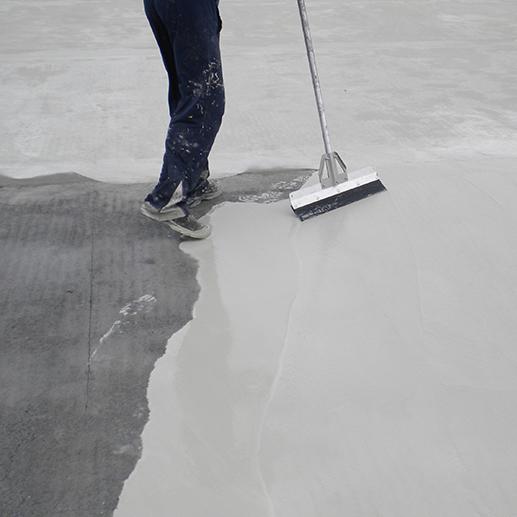
Anti-carbonation paints and thin mortars must stay continuous and bonded, and survive the weather. Every discontinuity - a hailstorm, a crack - becomes the point where deterioration starts.
Hydrophobic impregnation
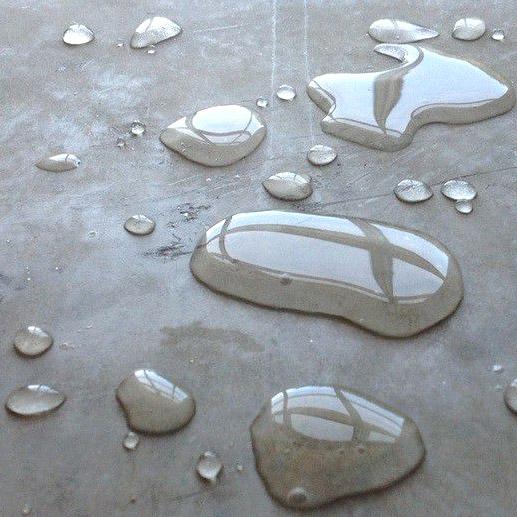
Promising on paper, but very few products have survived the test of time: UV and chemical interaction tend to shorten their service life.
Impregnation
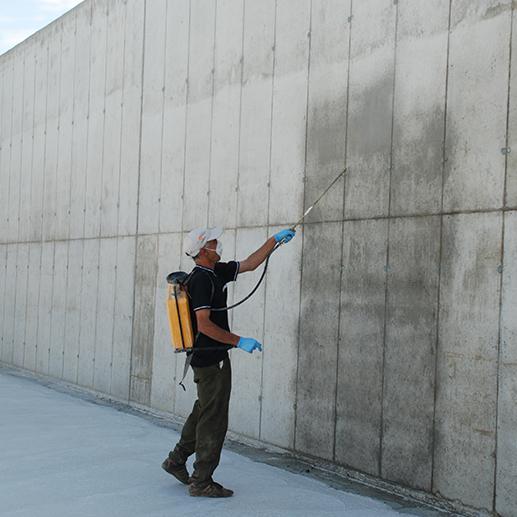
Superficially similar to the hydrophobic type, true impregnation physically saturates the micropores of the cement matrix, creating a far more durable barrier - especially with mineral products such as Evercrete Vetrofluid.
The missing piece: monitoring
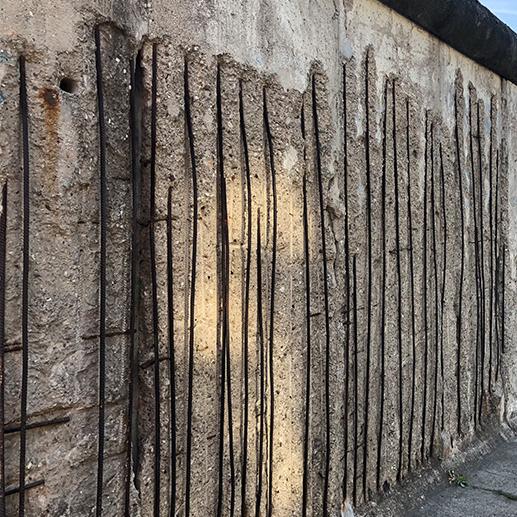
All three systems share a weakness: laboratory results in controlled conditions can differ enormously from what happens on site. In the real world - maintenance manuals and ministerial protocols notwithstanding - structures are often left to themselves for their first decades. Nobody checks whether micro-cracks have broken a coating's continuity. Nobody checks whether an impregnation is still blocking carbonation after a few years. Nobody looks at the critical spots where water runs off - until visible corrosion appears, often too late for an economical repair.
Ten years on German motorway bridges

The Bavarian motorway authority (then Autobahndirektion Nordbayern, now Autobahn GmbH) took the unusual step of commissioning annual monitoring of its newly built bridges. In 2007 numerous bridges in northern Germany were treated with Evercrete Vetrofluid. Every year since, the appointed laboratory Betotech GmbH has assessed de-icing salt attack, chloride penetration and abrasion.
"The bridge structures treated with EverCrete Vetrofluid are still in excellent condition after more than 10 years, so it can be said that the product EverCrete Vetrofluid has protected the concrete very well."
- Betotech GmbH reference letter

We waited a long time for feedback like this. Field proof of long-term protection - in a region with heavy rain, snow and winter salting - is the evidence that matters most.
What this means for UK structures
UK highway and rail structures face the same salt, freeze-thaw and neglect. If you have concrete to protect - a bridge, an airfield, a buried structure or an industrial floor - see how Vetrofluid protects from within, or read our 19-year WSW reference and how Vetrofluid works.