It is already too late. Pool works always happen in late spring - exactly when it is too late for a lining to cure properly. That, whatever the material chosen, is the number-one cause of headaches for anyone lining a pool.
A pool tank differs from an ordinary waterproofing job in two ways: the water is aggressive (chlorine, salt or oxygen) and, above all, it exerts real hydrostatic pressure. Many materials resist perfectly once properly cured - but filling the pool early causes detachment, blistering and discolouration.
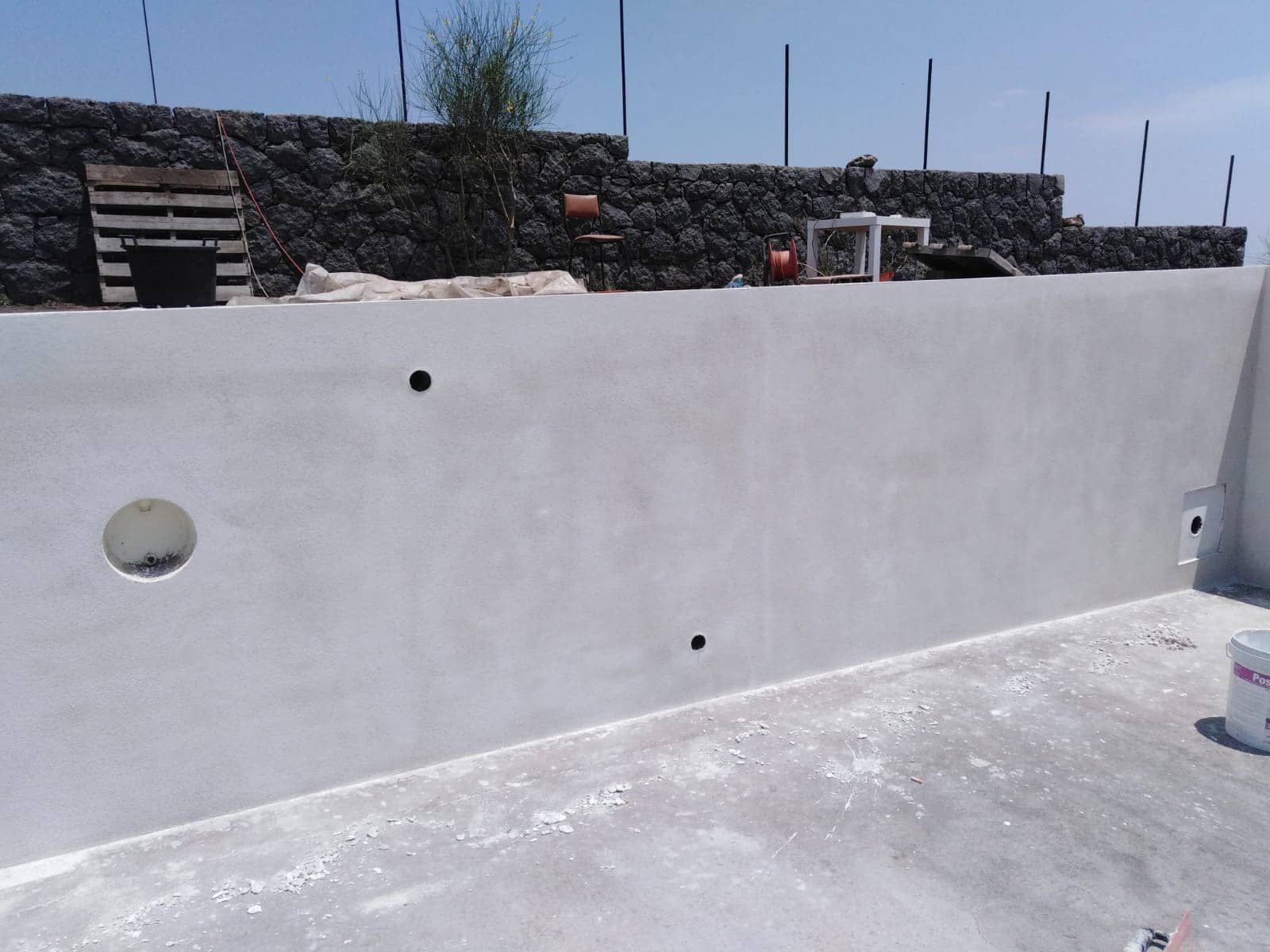
With a cementitious lining, curing time is at least four weeks after completion. Clear protective sealers on top do not change this: a few microns of coating cannot hold back water under pressure.
The other essential is waterproofing on the ground side: for in-ground pools, water from the surrounding soil pushes inward, and microcement detaches far more easily from this mechanism - especially while the pool is temporarily empty for cleaning.
The Ecobeton recipe for a concrete pool
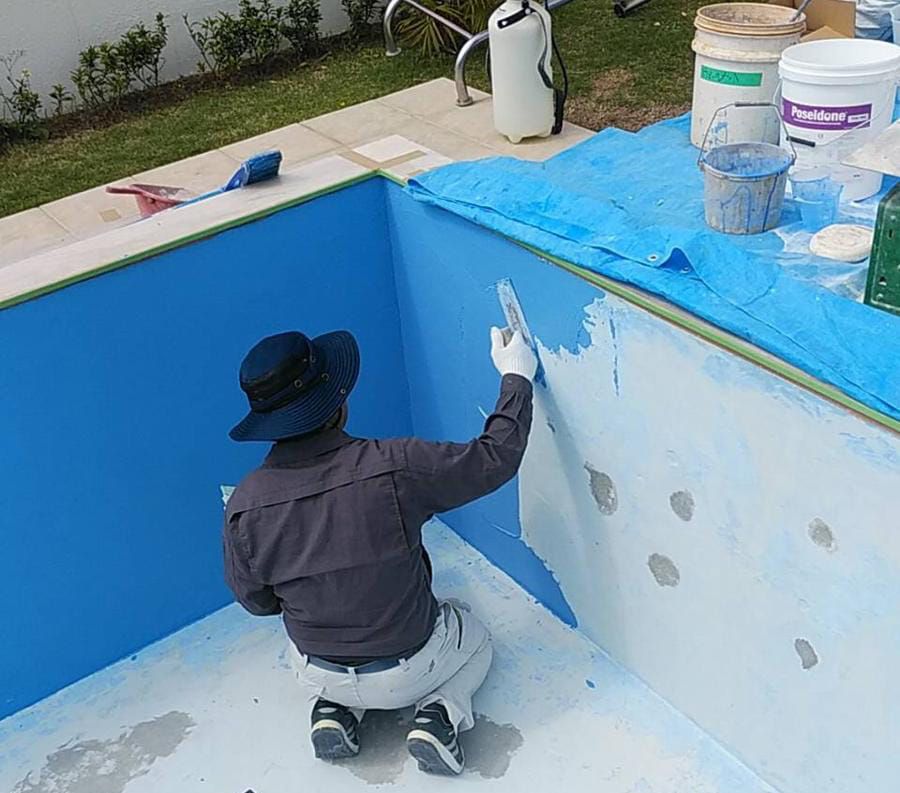
- Waterproof the concrete with Evercrete Vetrofluid. Sprayed on, it migrates into the pour and forms a silicate matrix that permanently saturates the pores. Apply from the outside (preferably) or the inside - thanks to its penetration it resists negative pressure too (400-500 g/m2).
- Roughen the surface. Formwork nearly always leaves the concrete too smooth for bonding; a scabbler or orbital sander solves it.
- Make good any honeycombing and ensure no form ties or through-elements are exposed.
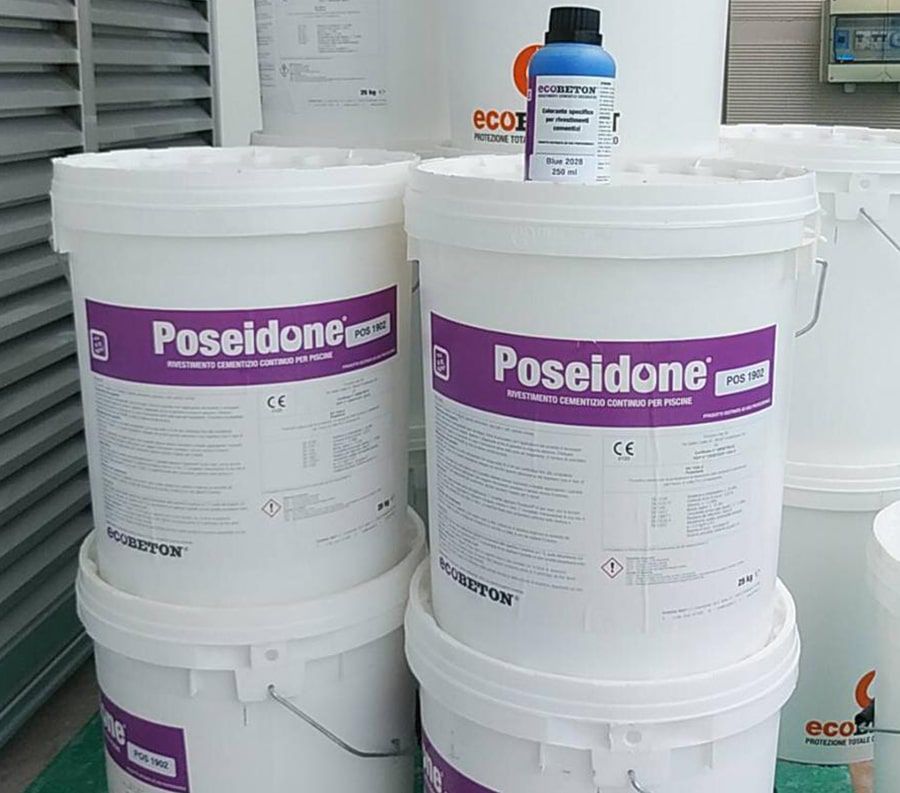
- Line with Poseidone, the microcement designed for pools: it both regularises the surface and provides the finish. Apply in several coats embedding an alkali-resistant glass-fibre mesh for uniform thickness (6-8 kg/m2).
- Optional protection with GiGi Sealer to ease cleaning and preserve the pigment. The sealer is not a waterproofer.
- Wait four weeks before filling.
A note on colour
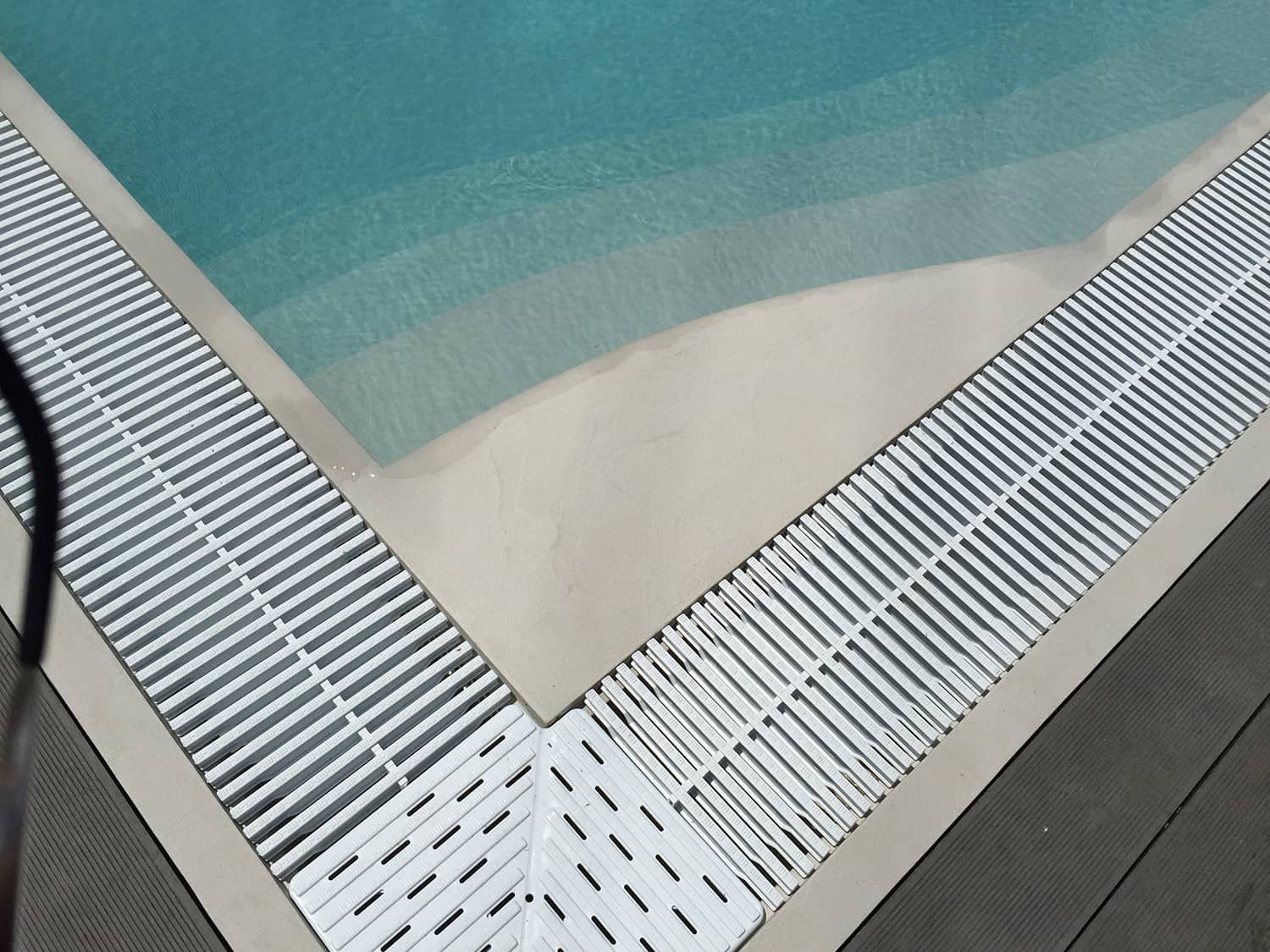
Judging the colour of the lining with the pool empty is of little use - what counts is the colour of the water. Choose the lining as you would choose sand: a light-sand tint gives very blue water; a warmer sand tends to green. That the lining looks different wet and dry is irrelevant - what happens to sand in nature?
Products in the UK: Poseidone, Vetrofluid, GiGi Sealer.
See finished projects and the full UK microcement range on our microcement floors and walls page.