Ever seen concrete so deteriorated that the reinforcement shows through, inevitably rusty? Look at the barriers dividing motorway carriageways, at structures near the sea, or anywhere with heavy pollution.
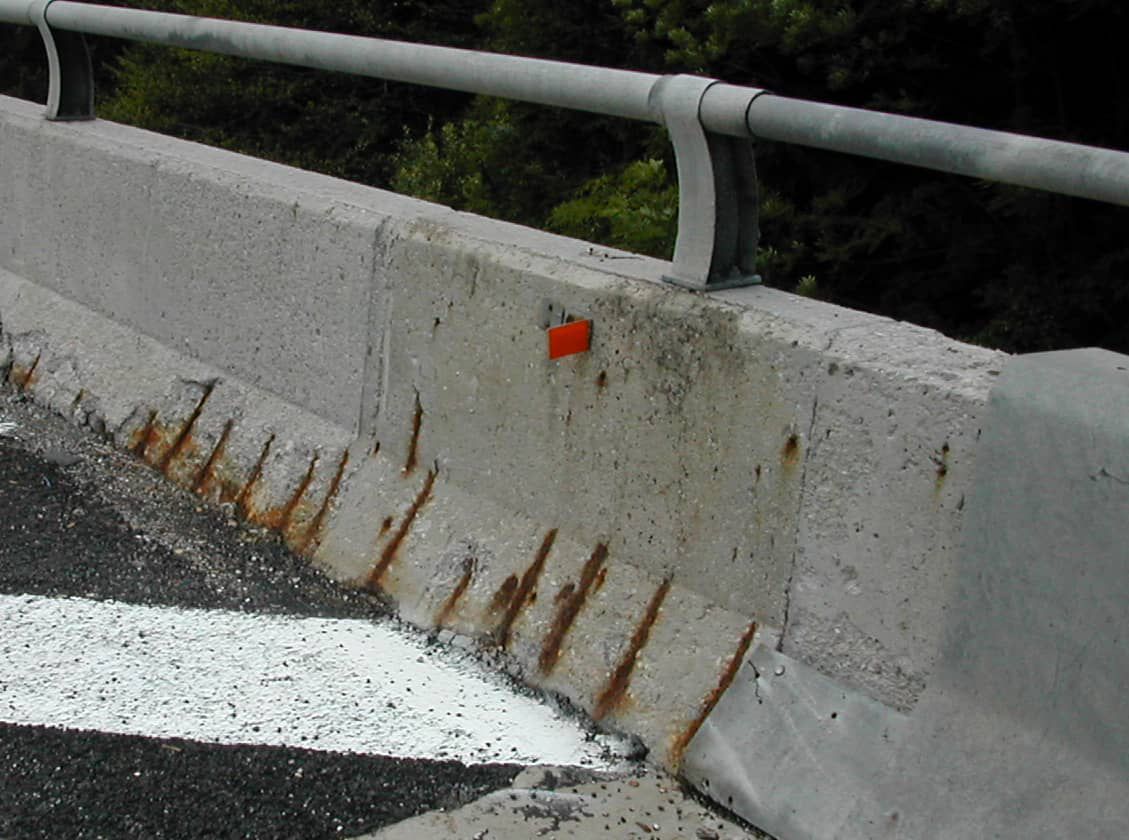
Why it happens
The main drivers that expose rebar are carbonation, chloride (salt) attack, freeze-thaw and acid attack. In each case the steel loses its protective passive film and rusts. Rust is expansive, and pushes off the cover. Before repairing, understand the cause: local, superficial patching does not always stop the process. The corrosion must be halted and the alkaline passivating environment restored.
First remove all loose material and, if possible, the carbonated concrete around the bars. Then treat the steel with a product that prevents re-oxidation before completing the concrete repair.
Passivator or converter?
Passivators are generally cementitious or epoxy slurries applied to "white metal" - meaning every trace of rust must first be removed by blasting, grinding or scraping, because the passivator must form a thin, non-porous, non-breathable film that excludes oxygen. Any remaining rust sharply reduces its effectiveness.
Rust converters work on a different principle: they stabilise existing rust and prevent further corrosion. No blasting or grinding to bare metal is needed - just clean off salt deposits, loose rust, grease and dirt. The rust film is transformed into iron tannate, an inert substance that halts oxidation.
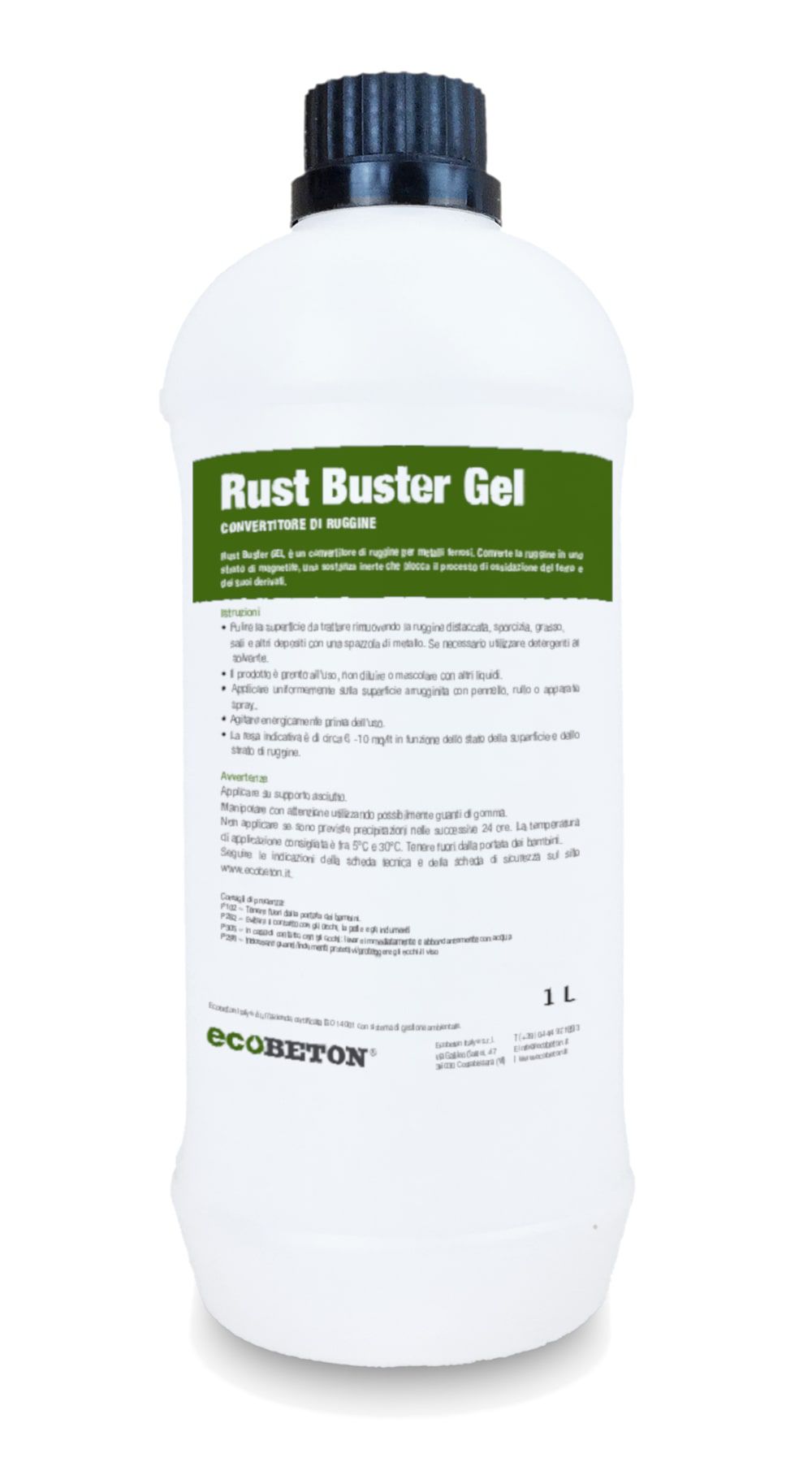
Ecobeton offers Rust Buster Gel, an ecological rust converter that complies with EU VOC regulations. Apply it undiluted in one homogeneous layer by brush or roller over the whole surface; the rust converts into iron tannate and a black-purplish patina forms. Once the product has acted, remove the patina mechanically or by washing - the converted surface resists further oxidation.
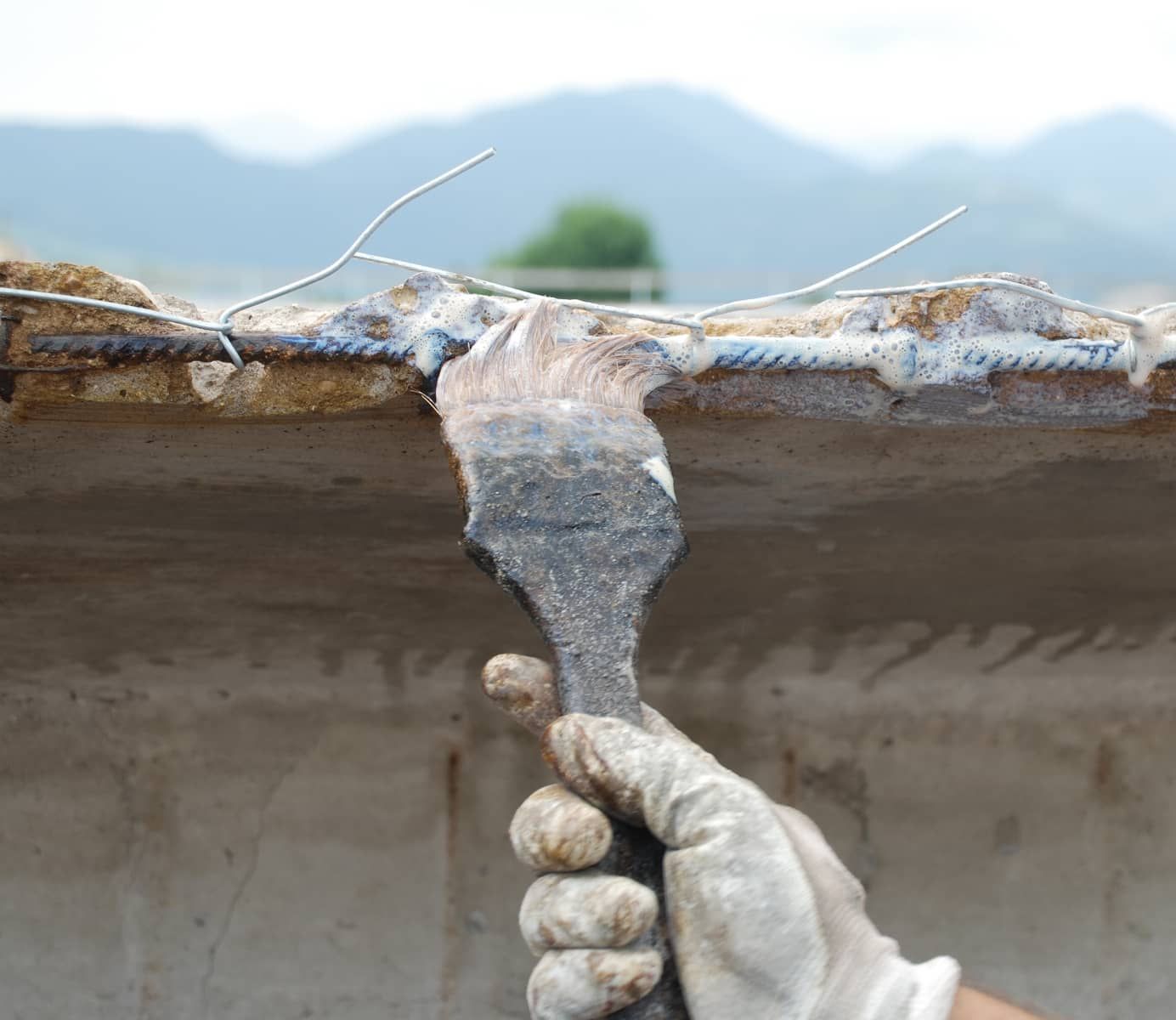
Treating rebar has never been simpler. Rust Buster Gel is step two of our concrete repair system.