"Concrete" has grown steadily more popular in interior design, residential and commercial. It pays to be clear about both the aesthetic expectations and the correct procedures - too often neglected in favour of supposed decades of experience.
Three techniques, one look
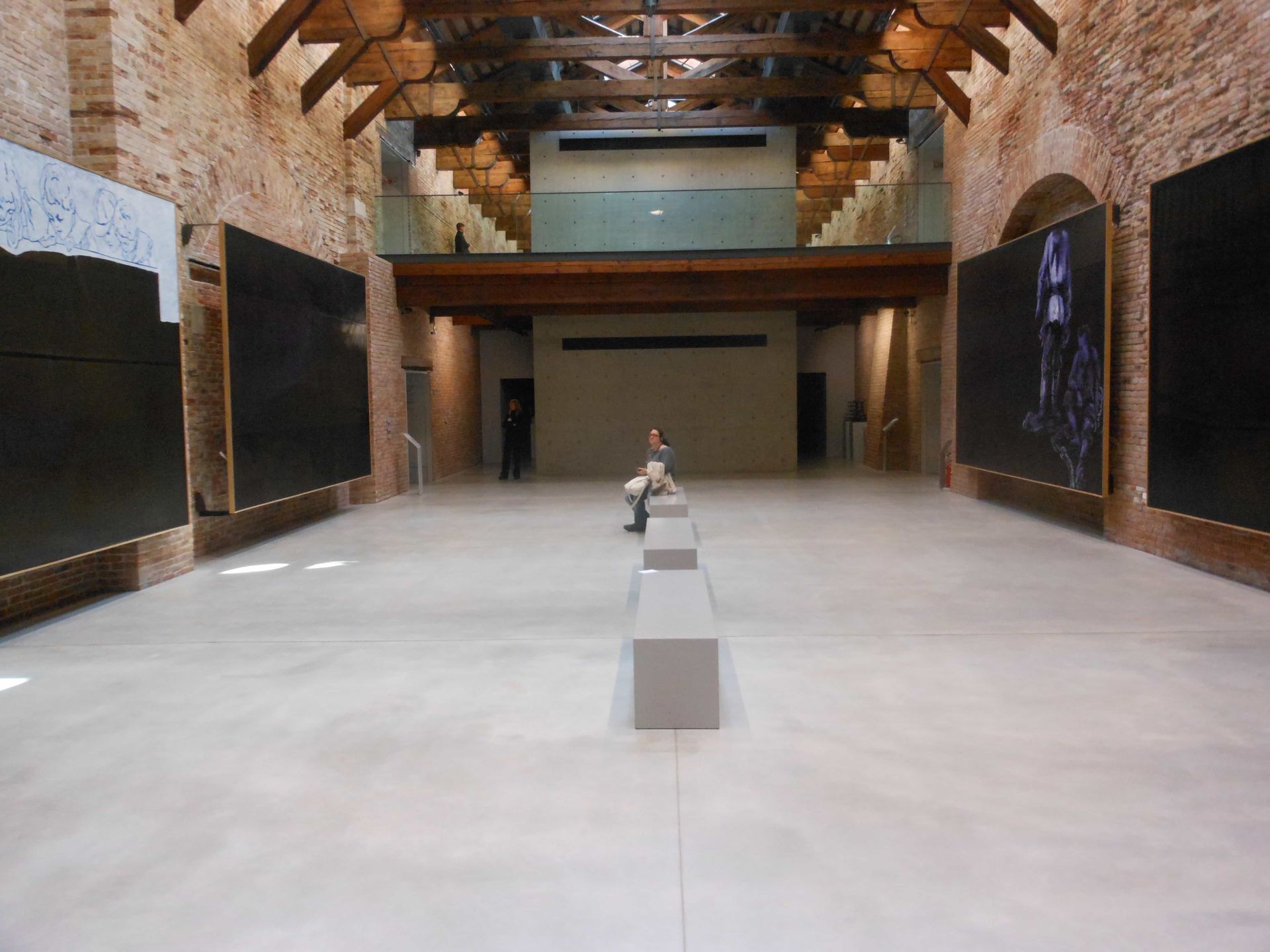
- Full-depth concrete pour: built like an industrial floor; finished power-floated or ground (polished concrete), as in Venetian terrazzo.
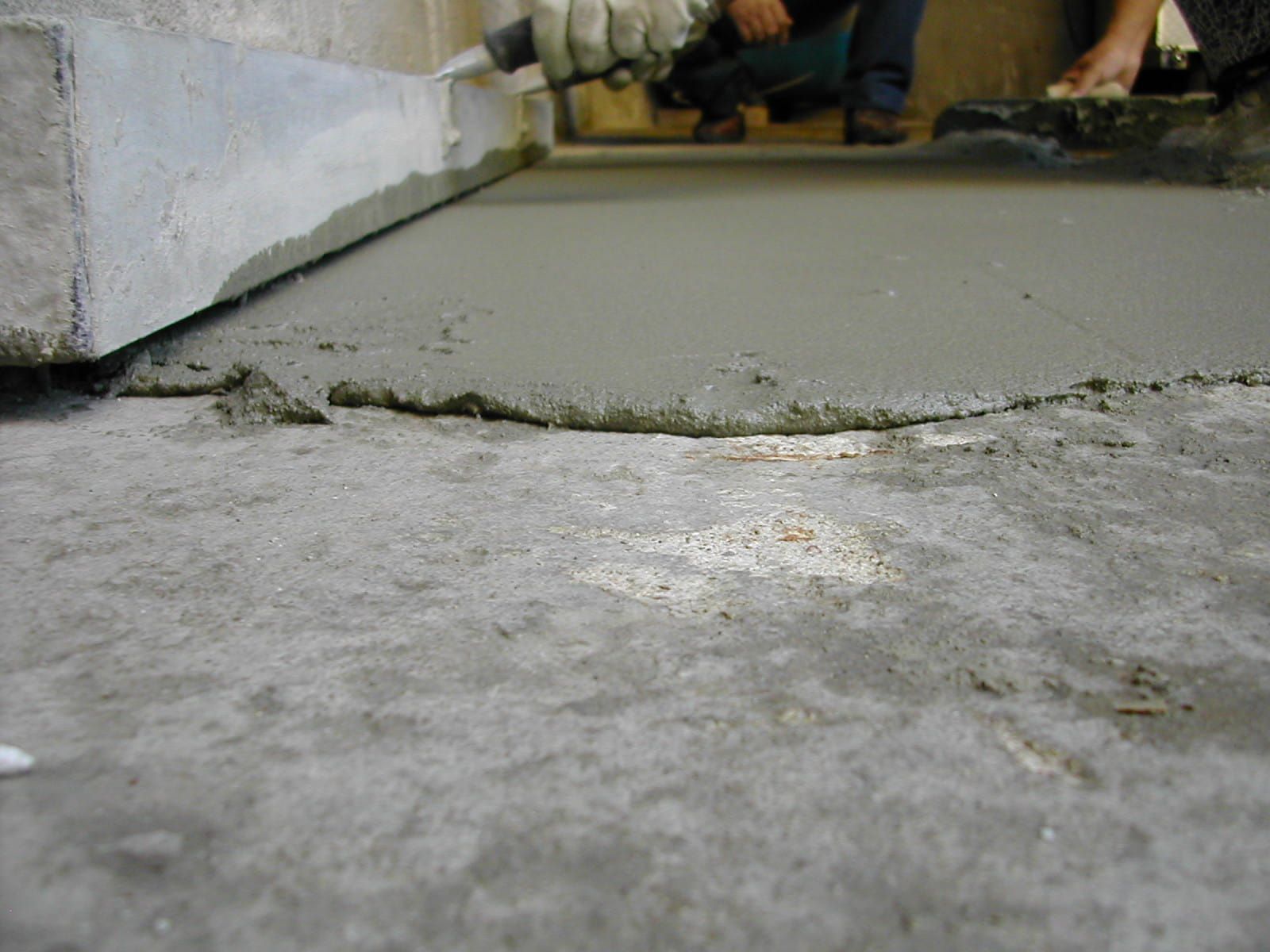
- Thin screed: a 2-5 cm screed, seeded with aggregate if a ground finish is wanted.
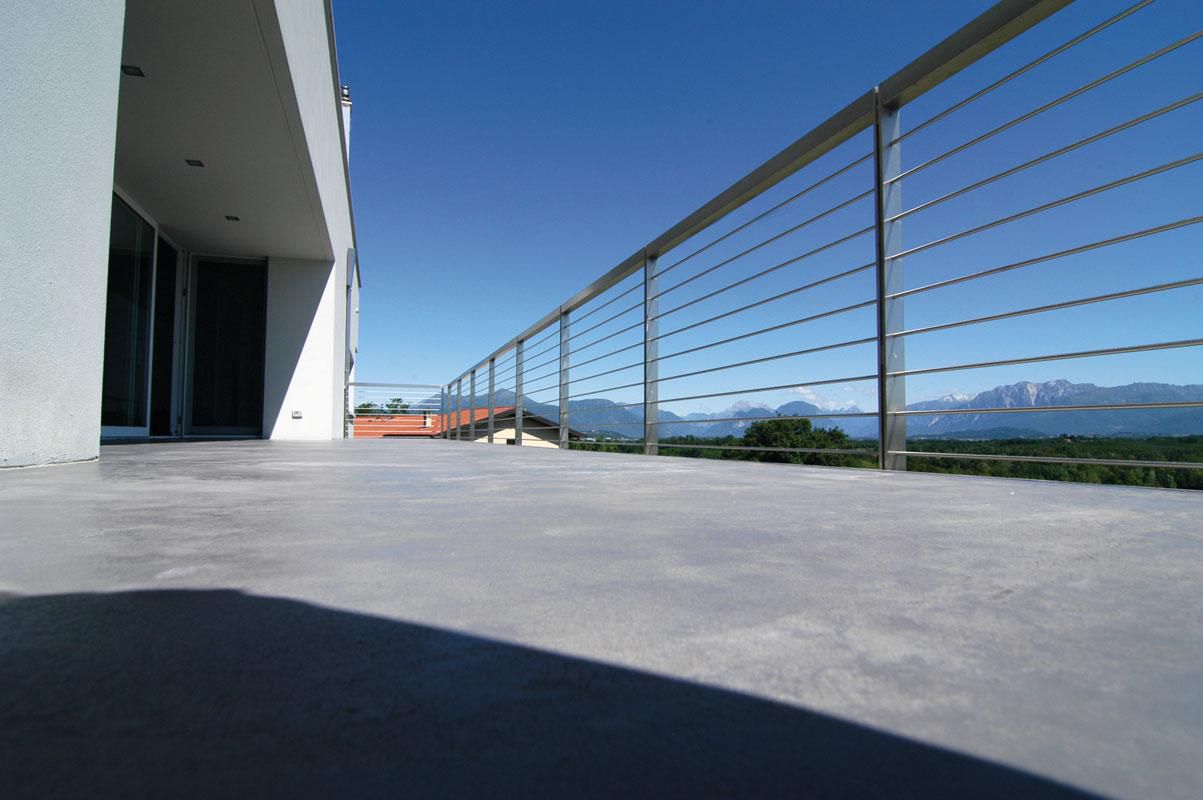
- Cementitious overlay (microcement): a 1-2 mm coating of cement mortar, hand-trowelled; sanding can further highlight the working.
Cracks
Concrete cracks for many reasons: excessive evaporation in the first hours; drying shrinkage or curling in the first weeks; thermal shock (day/night swings over 10-12 degrees); structural stresses or slab deflection. Thin screeds can crack too, from their own composition or by reflecting cracks below. Microcement technically cannot crack, but reflects every crack in the substrate instantly - so the substrate must be mature, crack-free and sound, and joints must be carried rigorously through the overlay.
Joints and panel size. Panels over 4 m in any direction, or elongated, will crack. Control the crack rather than leave it to chance: limit panel size to 40 times slab thickness (100 mm slab: 4 m), avoid re-entrant corners, isolate the slab from walls and columns.
Joint filling. With underfloor heating or air conditioning, joints open and close - use a flexible filler.
Crack control. In slabs, correctly sized and placed mesh, or fibres in the mix (preferable, except for ground finishes). In screeds and overlays, glass-fibre mesh or fabric is sometimes used to bridge joints and existing cracks - and very often applied wrongly, with aesthetic or functional defects as a result.
Vapour barrier. Doubles as a slip layer letting the slab move; lay it flat - creases restrain and induce cracks.
Protection
Concrete surfaces are not impermeable and can stain permanently. Apply a protective such as Cerbero Sealer or GiGi Sealer to block oils and dirt; treat periodically. High-gloss protectives can reduce grip when wet - add an anti-slip additive to the sealer.
Maintenance
Relatively easy, but not zero. Light domestic use: annually; generally every 1-5 years; commercial floors may need refinishing every 5 years. Daily cleaning with Steinfix 60 greatly extends the life of surface protectives.
Cost
Concrete floors are often wrongly assumed to be cheap. A decorative surface can cost more than a budget or mid-range covering, but remains a valid alternative to ceramic, slate and marble, and its life expectancy exceeds most alternatives, amortising the initial cost. Smaller areas are harder, not easier, to finish well.
UK enquiries: see decorative overlays.